| Movies | Chinchillas | Degus | Persian Jirds | Baby Jirds | Gerbils | Cages | Guinea Pigs | Search |
| eRodent > Degu Page > Degu Information |
Degu Information Sheet.
This page was originally developed to give out at a pet show and is online on my site. If you have been given a printed out version the website is at http://www.eRodent.co.uk and you can find the any additional information mentioned there. Please feel free to copy or print this page out and give it to others.What is a Degu?
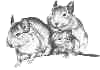
A Degu (pronounced Daygoo - although honestly I still call them deegoos a lot of the time) is a small Rodent with tweed brown coloured hair, a cream tummy and lighter circles around the eyes. A full grown adult is about 6" long with another 6" in tail with a bit of fluff on the end, which is worth bearing in mind if you buy babies and are thinking about cage size. I have heard them described as a large gerbil or a gerbil crossed with a chinchilla, but in behaviour they are more like a ground squirrel and are sometimes referred to as Chilean Ground Squirrels.They are classified as rodents, related to guinea pigs but I have seen it written that they are more closely related to rabbits. The teeth of a healthy Degu are orange coloured. Their Latin name is Octodon Degus. Octodon means "eight-toothed rodent" because their molar surfaces look like a figure "8" - I can't confirm this as I've never seen the surface of a degu's molars.
Degus make good pets as they are friendly little animals and are awake during the day. They will doze on and off during the day but once they get to know you they will come flying over to see you when you walk into the room. They make a variety of sounds and seem to have quite a complicated language. Their distress call is a high pitched beep beep sound. They chitter when they are upset and will screech at each other when they are having a wrestling match or someone swipes their food. Some Degus are more vocal than others and will come and "talk" to you. There is an example of a degu talking on my Rodent Movies page and more information on degu sounds on the degutopia page at http://www.degutopia.co.uk/.
Degus were transported to Europe and North America from Chile, where they live from the West Coast to the Andes Mountains. I have read that one reason for this was to do research into diabetes as they are very prone to it.This means that they need to be fed carefully to keep them healthy - more details below. There seem to be varying reports of how long Degus will live in Captivity. It is safe to say that most Degus will live at least 5 years but a few will make 8 or 9 years.
One, Two or More Degus?
The Degu is a very sociable animal, living in groups in the wild, and they can get quite lonely and depressed on their own. It is best, if possible, to keep at least two animals. Two or more degus of the same sex are a good idea, so if you find a small gang of same sex degus living together (for example at a rescue) then why not take them all? Two need a pretty big cage anyhow and they are great fun to watch in groups. Very large groups need more consideration as there are likely to be more vets bills as they get older just due to the number of animals. Male degus kept together need a little more care, they are best kept away from females, as they can fight when a female comes into season. Most male groups live together happily, but it is not unknown for fights to break out, particularly as they reach maturity and are sorting out the group pecking order and occasionally this can result in them needing to be separated. Make sure that there are places in the cage where a picked on degu can get away from the others - this also applies in female groups.Don't keep a mixed sex pair together - particularly if they are related. Female degus give birth to quite a large number of babies, and get pregnant again straight after giving birth. The baby females can also get pregnant quite young. It is not uncommon for rescues to hear of people who got a pair, let things get out of hand and have dozens of degus looking for a new home. Sadly rescue centres seem to find it difficult to get the little fellas homes so please don't breed.
If you have a single degu (for example after loosing their friend), lone females can usually be introduced with care, but males are more challenging. It is not a good idea to introduce a male degu to an existing group as this can interfere with the existing pecking order and cause fights which can be fatal. If you have a lone male degu, they can be neutered by an experienced vet. They are unlikely to have done a lot of degus, but look for one with plenty of experience of neutering chinchillas, who is willing to find out about neutering degus. Make sure the vet that you talk to is doing the operation - not, for example, a locum. Introducing degus can require time, patience and either two cages or one securely separated by a wire mesh divider to give them plenty of time to get used to each other. However, neutered male - female introductions seem to be the most straight forwards and I simply introduced my two in a neutral environment and then put them in a cleaned out cage. But do not rely on it being that easy. More information on the introductions page.Your Degu’s Home.
When getting a home for your pet it is important to remember that babies will grow quite a bit, and degus are active creatures that like to climb. A large rat or a chinchilla cage with the mesh floors taken out, or covered, is ideal, but avoid plastic bases as these can be chewed through remarkably quickly. Go to the Degu Cages page for more information.
I have used Megazorb horse bedding in the bottom of the cage and now use Ecobed. More details of this on the Bedding page. Degus love to climb and chew so wood perches are ideal. Wooden toys and branches are good and you can also buy chews designed for Chinchillas, which are ideal. Degus claws are quite sharp and so it is worth having a piece of stone in the cage for them to rub them down on. You can also get stone parrot perches that are designed to keep claws worn down and these also work quite well. I have placed one so that they have to walk across it to get to the upper levels.
Degus need lots of exercise to keep them well, and should be provided with a large solid wheel that does not have spokes, which can catch feet and tails. These are getting easier to find in this country. Check out the Wheels page for more information. Degus enjoy a dust bath to keep their coats clean. You can buy dust for chinchillas and give your degus a large ceramic bowl with an inch or two in the bottom for a short period everyday. It is very amusing to watch them rolling about in it. Don't worry if they appear to be eating the dust, it doesn't seem to do them any harm. The dust bath shouldn't be left in the cage for too long or they will use it as a toilet.
Your Degus will also need two food bowls (to prevent squabbles), a water bottle, somewhere to put their hay (I use a large bowl as I'm afraid for legs with wire hay racks), and will appreciate a box to hide and build a nest in. Mine tend to rip up cardboard for nesting material or try kitchen roll torn into strips. More information on amusing your degus on the Environment Enrichment page.
Feeding your Degu.
The most important part of looking after your Degus is to feed them correctly. It seems likely that in the wild degus live on large amounts of low quality vegetation which needs a lot of digestion, and so cope badly with energy dense and sugary foods. Degus given lots of sugary treats such as breakfast cereals, cake, biscuits and dried fruit, or just too many pellets and not enough hay, tend to get fat and may develop diabetes, fatty liver or cataracts. Don't let this put you off owning a degu, it's not just degus that need feeding carefully to keep them healthy, all small animals need this (as do people). Fed properly they are robust, healthy little fellas.
Although a lot is discussed about the right sort of pellets, the majority of the degus diet should consist of low calorie forage such as good quality hay and dried grass. I get cross when I see degus in pet shops with a big bowl of guinea pig mix and no hay. Buying a few different varieties of hay and rotating them usually increases the amount eaten as we all like something different. In addition to preventing weight gain and keeping blood sugar levels steady, this is also very important to wear teeth correctly and prevent dental problems in later life. This can be supplemented by a small amount of good quality guinea pig or chinchilla pellets - use a pellet rather than a mix as degus will pick out the bits they like and hide the rest and so not get a balanced diet. You often hear that pellets should not be molassed, but if you cannot find an unmolassed pellet the most important thing is to keep the amount down and feed plenty of hay. I've always used Burgess Supra Guinea Excel pellets. Degus also benefit from small pieces of vegetables, particularly dark green leafy vegetables such as broccoli, which are stuffed with vitamins and minerals. Some degus can be fussy if they haven't been fed them as a baby but will often be persuaded to try with perseverance. Being in with a non-fussy eater will soon get a degu eating veg as if someone else is eating it, it's gotta be good. Although many sites say do not feed fruit because of the natural sugar, fruit is usually digested quite slowly. You do need to be very careful about portion size. You wouldn't eat a bit of fruit the size of your head so don't give this to the degu - a person portion is paw sized and so is a degus. Veg can be a bit bigger but again stick to half an inch across. There are a number of very good dried herb mixes available, but avoid those with dried fruit or grains and never feed commercial small animal treats such as grain sticks or 'yoggies'. I feed small amounts of porridge oats occasionally but most breakfast cereals are unsuitable treats as they are digested too quickly - beware though porridge oats can cause punch-ups in the cage. More on the feeding page.Degus should always have access to a supply of clean, fresh water. It is often said that Degus should be fed bottled or boiled water, however it is more important that the water is fresh and the bottles kept spotlessly clean (bottled water is actually more likely to have high levels of bacteria in it than tap water in the UK). The suggestion that you sometimes see that water should be chlorinated using household bleach is just plain dangerous, and certainly does not apply in the UK where the water is already chlorinated.
Degu Health.
As with all small animals the best way to keep your degu healthy is to feed them correctly, give them plenty of exercise and get them to the vet immediately there are any signs of problems. Try to weigh your degu every couple of weeks as weight loss can be the first sign of problem - an unexplained loss of 20-30g or more in a few weeks may indicate the need for a vets visit. By the time you can visually see weight loss it is usually quite severe.
The first thing to say in any section on health is that if in doubt take your pet to the vet. There is no excuse for not doing this - if you cannot afford the vets bills then you cannot afford the pet. Ring around and try to find a vet who has plenty of experience with small rodents and is interested in finding out about Degus even if he/ she has not seen one before. My vetinary book (Diseases of Small Domestic Rodents by V.C.G Richardson) says that they can be considered as a half sized Chinchillas for medication purposes, but your vet may have more up to date information than this as degus are becoming increasingly well known. I would strongly advise finding a vet before you need one in an emergency, and maybe take your degus in for a checkup. In this way you can decide whether you like the vet and they seem interested before you have a sick degu on your hands - you still hear the odd sad story of vets who are just not interested in small animals. When you take a degu to the vet take its cage mate(s) with you as it reduces stress and sometimes reintroductions can be a problem if the degu comes back smelling funny. It also seems to improve survival rates after operations to have your mate standing on your head! Degus seem to be generally robust little rodents but there are one or two conditions that you should be aware of.
Diabetes: Degus appear to be naturally insulin resistant and can become diabetic. Sometimes you hear people say that degus cannot digest sugar but this is not what is going on, it seems that they simply have a less active form of the hormone insulin. You can skip the following section and go straight to preventing and managing diabetes if it doesn't make much sense to you.
Diabetes 101: Degus will still have glucose in their blood to supply energy to the tissues, the same as any mammal. Glucose is a simple sugar that is a building block for a number of carbohydrates. For example starch (e.g. in grains) and cellulose (in plant cell walls) are both made up of glucose strung together, each in a different way. When a degu eats food containing these, it is digested and glucose released into the blood. So the obvious question is why do we then restrict simple sugars in the diet if part of their food is broken down into glucose anyway?
The answer is about how long it takes to digest different food. Simple sugars are digested very quickly as they don't need much breaking down, starchy foods take a bit longer and fibrous plant material containing cellulose needs to be fermented in the degus gut by good bacteria and takes much longer. This results in the glucose being released into the blood much more slowly. In the wild degus browse continually on hard to digest material resulting in a constant low level of glucose being released into the blood. In order for the degus body tissues and organs to take up this glucose and use it as energy they need the hormone insulin. here are receptors on the cells that detect the insulin and tell the cell to take up glucose.
When a large amount of easy to digest carbohydrate such as starchy or sugary foods are eaten in the diet, they are digested and the glucose is released into the very quickly. This results in a large rise in the blood glucose level and a large release of insulin. If this happens a lot then over a period of time the number of receptors for insulin on the cell surface drops and the cells do not respond as well to insulin. This is known as insulin resistance. Degus seem to be naturally a bit insulin resistant and have a less active form of insulin - probably due to their diet in the wild. Insulin resistance isn't just about high levels of sugar in the diet it can also be made worse by high levels of fat in the diet, being overweight and low levels of activity. Ultimately the cells will not respond well enough to insulin to get the blood sugar level down to a safe level and this is type II diabetes (as opposed to type I diabetes when the body cannot produce insulin at all). High levels of glucose in the blood can cause all sorts of problems including damage to the eyes, blood vessels, kidneys and nervous systems.
Preventing and Managing Diabetes: The first sign of trouble can be that your Degu gets very fat or develops cataracts. They may also drink more water than normal and if the diabetes becomes severe may loose weight. Prevention and management are the same. Feed them carefully as above on plenty of good quality forage such as hay and dried grass and some pellets and small amounts of fresh vegetables. Don't feed unsuitable treats or let them get fat. They may like treats and look cute when they beg but it is not kind to feed an animal treats until it becomes obese and dies young. Lots of exercise is also preventative so a wheel can be a good idea. If you have a fat Degu reduce the amount of pellets and cut out all treats letting the animal eat mainly hay - never allow the supply of hay to run out as degus need to munch pretty much continually to keep their gut working well.
Bumblefoot:
Having to walk on wire surfaces continually can cause this painful condition. The Degu may have difficulty walking and might show pain while on his feet and have red inflamed feet, or even open sores. Once developed these sores can take a long time to heal, so a visit to the vets is essential as antibiotics may be required. Remove wire-mesh bottoms from chinchilla cages and provide a solid wheel to prevent this. A degu with bumble foot may need fleece bumble pads and hammocks to walk on as well for a time - see the pet shopping page.Mouth and Dental Disease: Degus are prone to infections of the mouth and dental problems. Make sure that the water bottle is kept spotlessly clean. To keep their teeth healthy they also need plenty of low quality forage to wear them correctly. If your degu has lost weight or is having problems eating, is pawing at her mouth, drooling or has weepy eyes then suspect teeth problems. As with chinchillas their molars can grow spurs causing lots of pain. The teeth of a healthy Degu are orange coloured. Light yellow or white teeth are an indication of a serious disease or deficiency and loosing front teeth, except due to an obvious accident, is also a bad sign.
There is limited information available about degu teeth problems, but information on chinchillas is relevant. There are some information and links here. However, Degus have smaller mouths than chinchillas and so it can be much more difficult to work on them. Sadly sometimes the kindest thing to do with a degu with dental problems may be to have them put to sleep. Dental abscesses in particular are very painful and can rarely be treated successfully. As with all medical problems discuss it carefully with your vet and ask for an honest opinion on quality of life. Just because a vet is willing to try something does not necessarily mean it is in the best interests of the degu - this is particularly true for extreme procedures such as teeth removal which are likely to cause a lot of damage to the jaw and large amounts of pain with little chance of success. It is always heartbreaking to have a perfectly healthy animal put to sleep due to dental problems but it also isn't kind to extend a life if it is a life full of pain.
Cataracts: Cataracts in Degus may be due to diabetes or a genetic condition and the symptoms are greying of the eye and sight problems. They usually occur in older degus but can also younger degus. Degus have whiskers which prevent them from bumping into things and a good sense of smell and so should manage fine - just make sure that shelves can be arranged so that they can feel the next one with their whiskers and don't rearrange the cage too often.
Strokes: Degus can have strokes as they get older. These usually involve loss of use of part of the body and the degu may find it difficult to get up. Make sure that you keep them warm and get them to the vet asap.Occasionally a degu may recover from a minor stroke if they can still get around and eat, but often it is kinder to have them put to sleep.
Respiratory Problems: Symptoms of these are often noisy breathing or clicking and being quite lethargic, sometimes with nasal discharge. Take your degu straight to the vet. The sad news with respiratory problems is that they are nearly always a symptom of another problem such as a tumour or organ failure rather than the main problem. This is particularly true if there is weight loss. Often antibiotics will result in an improvement followed by deterioration. But this does not mean that they are not worth treating - always take the advice of your vet.
Fur Chewing or Biting: You often see Degus with chewed tails and it is not clear what causes this. In chinchillas fur chewing is said to be down to boredom, stress or lack of fibre. So make sure that your degu has plenty of toys and hay to eat. If a tail is damaged they may also chew at it and it due to pain or lack of feeling. It is also possible that nerve damage due to diabetes may cause lack of feeling in extremities. You can get foul tasting stop-chew lotions designed for chinchillas that can help with this - particularly if it is another degu in the cage doing the chewing but remember the degu will also get this in its mouth when grooming.
Dry Skin: - Degus tails can become quite dry looking. You can try a non scented moisturiser or oil on it. If you do it before a dust bath the dust will stick though. If the skin is particularly dry you could try supplementing the diet with some linseeds or millet for essential oils - but not too much as they are very high in fat.
Injuries and Fight Injuries: An injured degu should always be taken to a vet. This is particularly true in the case of fight injuries which can become infected, or broken limbs. Damaged tails are common and degus should never be caught by their tail which they can shed the skin from as a defence against predators. These usually heal well, but it is worth getting the vet to check them just in case. Degus are naturally quite boisterous, boxing and pushing each other around, but if blood is drawn they need to be separated. Sometimes in a group it is possible to identify the aggressor and remove them, or split into smaller groups but great care is needed.
Ovarian Cysts: I know that Degus can get these as one of my degus had one. In Guinea Pigs the symptoms include hair loss on both sides and getting quite wide. The cysts can go down of their own accord. In guinea pigs the vet will often do a full hysterectomy but understandably with Degus being so much smaller this is a last resort. Again in guinea pigs they can be treated with hormones which might be an option. Talk to your vet.
Euthanasia.: Sadly this is often the last kind thing that we get to do for many of our pets.If your pet is obviously terminally ill and suffering then you have to ask what the benefit is to prolonging the pain. In my experience most Vets are very reluctant to put an animal to sleep if there is any chance of saving them and so if your Vet recommends this action then it is probably the best thing to do. It is sometimes more difficult when you have got into the cycle of more and more heroic efforts to save your beloved pet - just because something is possible and you have a vet willing to do it, it doesn't necessarily make it right. Ask your vet for an honest assessment of likely success, the amount of pain likely to be caused and the life expectancy afterwards. So for example an amputation of a damaged tail on a young, healthy degu may be worthwhile as they would have an expectation of a normal, pain free, life expectancy after recovery, but extreme dental surgery on an elderly degu whose teeth are likely to continue to get worse and will continue to cause pain is probably not.
Breeding.
Please think very carefully before breeding any small animal. Are you in a position to provide good homes to all of the babies that result from breeding? Are you willing to keep any babies that you cannot find homes for? It can be difficult to provide the attention and pay for the vet bills that lots of pets inevitably mean. An out of hours emergency caesarian can cost a lot of money and is very risky - if you aren't willing to pay for this then you shouldn't be breeding period. There are a lot of degus turning up in rescue centres at the moment, often due to irresponsible breeding. Wouldn't it be better for people to take some of the degus out of rescues instead? If you can't afford to get your male degu neutered, you certainly can't afford the potential vets bills of breeding. Inbreeding of related degus causes, health problems, short lives and genetic problems such as fits and club feet.
This is only a very brief overview - there is more information elsewhere on the Internet if you have a pregnant degu. It is not easy to spot that a female is pregnant until about a month before the birth. After this, try not handle her. Make sure that you have a suitable vet well in advance of the birth that is willing to deal with out-of-hours emergencies. Baby degus are large and there are lots of them, which leads to high levels of complications.
The gestation period is long for rodents at about 90 days and the babies are born with fur and teeth and their eyes are often already open. A Degu female can get pregnant within 24 hours of giving birth so it is recommended to separate the male before the birth to prevent a breed-back litter, which is not good for the female or her young. In the wild a female degu can only expect to live a couple of years so the best bet is to have as many babies as possible in as short a time as possible regardless of the effect on her long term health.
Only a few hours after their birth, baby degus will start searching the surroundings of the nest box. Soon after this, they will also start eating normal food. They can be removed from their parents at 8 weeks and it is important to remove the females from their father promptly or he could mate with them. Degus can be sexually mature as young a couple of months, although this is unusual. As previously mentioned it is not uncommon for rescues to receive a cage with dozens of degus in, all the females being pregnant.| Back to Main Page |